
Running ads for an eCommerce brand often sounds simple. Many store owners believe that launching a few Facebook or Instagram campaigns will automatically bring sales. In reality, successful advertising requires structure, testing, and consistent optimization. Without a clear strategy, ad spend quickly turns into wasted budget.
At EcommeLogic, we worked with a Shopify-based eCommerce brand to build a more predictable and scalable advertising system using Meta Platforms advertising tools. Instead of chasing quick wins, the goal was to create a repeatable system that could consistently generate sales and support long-term growth.
Over the course of the campaign management period, the brand achieved strong results through a structured approach.
Campaign Performance Overview
The advertising system generated measurable growth across several key performance indicators.
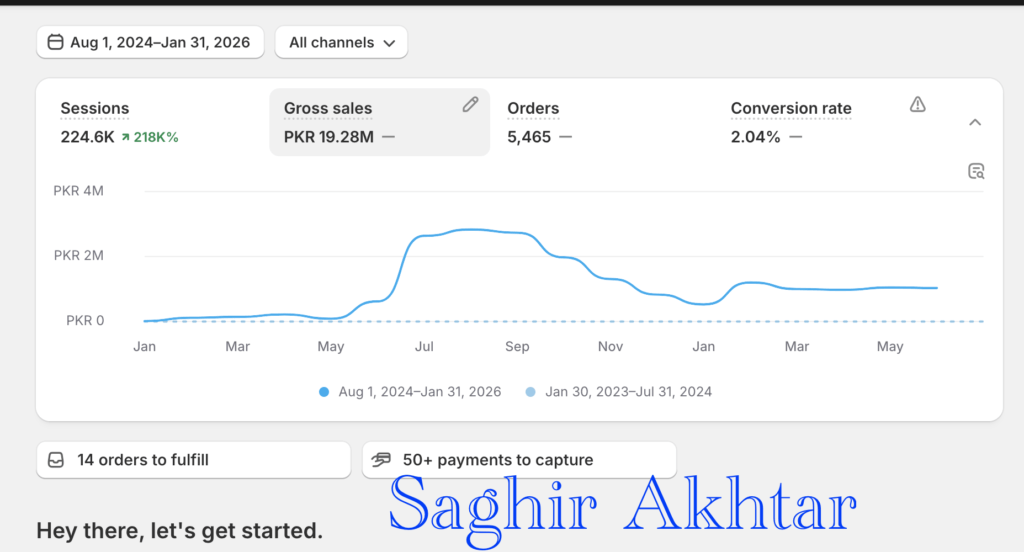
- PKR 19.28 Million in total sales
- 5,465 total orders
- 224,000+ store sessions
- 2.04% conversion rate
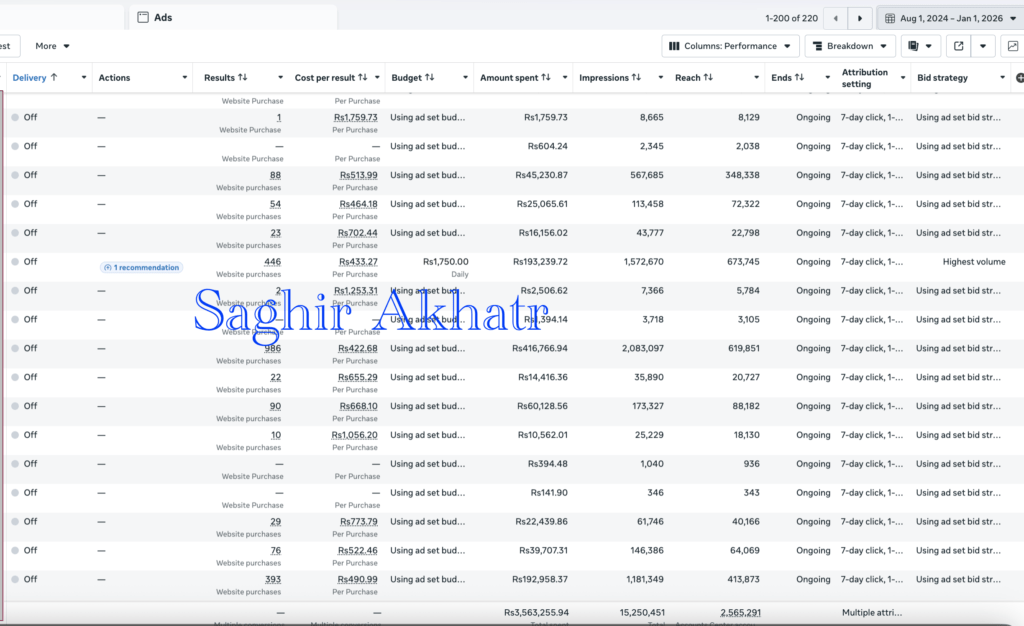
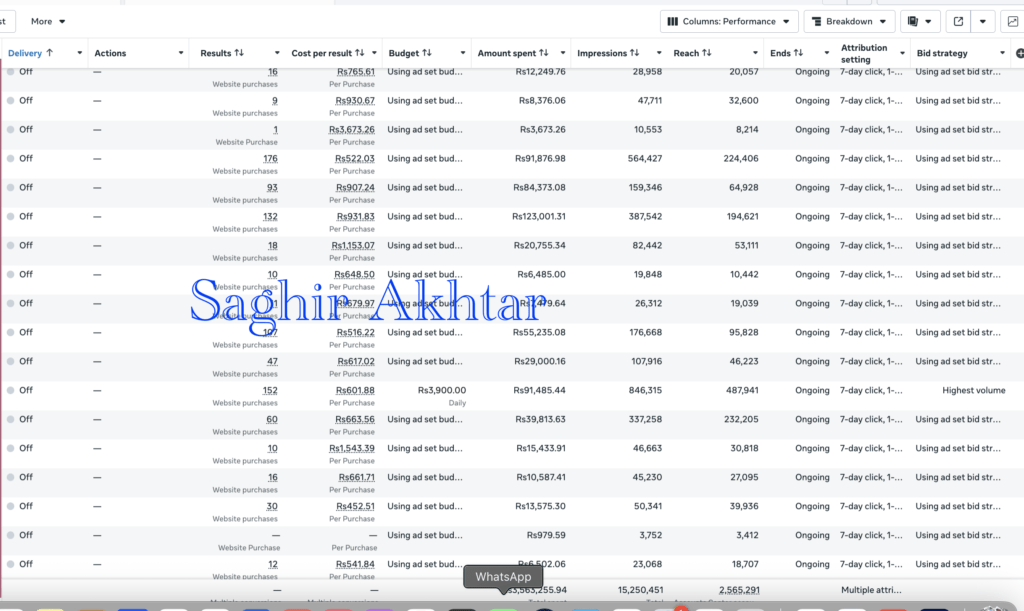
- More than PKR 3.5 Million in ad spend managed
These results were not driven by a single viral ad or a temporary trend. Instead, they came from a consistent process focused on testing, data analysis, and careful campaign scaling.
High-Performing Campaign Results
Several campaigns performed exceptionally well once the right combination of creative, audience, and optimization strategy was found.
Some examples include:
- 446 purchases with approximately PKR 433 cost per purchase
- 393 purchases with approximately PKR 490 cost per purchase
- 176 purchases with approximately PKR 522 cost per purchase
For eCommerce advertising, maintaining a controlled cost per purchase while scaling volume is critical. These campaigns demonstrated that strong performance can be sustained when the advertising structure is built correctly.
The Strategy Behind the Results
The biggest mistake many businesses make is expecting instant results from ads without investing time in experimentation and optimization. The approach used here focused on building a repeatable system rather than relying on luck.
Several key principles helped drive the growth.
1. Continuous Creative Testing
Creative testing played a central role in campaign performance. Instead of relying on a single ad design, multiple creatives were tested regularly.
Different elements were evaluated, including:
- Product images vs lifestyle visuals
- Short-form video ads vs static images
- Different messaging angles
- Various hooks and call-to-actions
This process helped identify which content resonated best with the target audience. Once winning creatives were identified, they were gradually scaled across campaigns.
2. Proper Audience Segmentation
Another important factor was audience targeting. Instead of relying on broad targeting alone, campaigns were structured to test multiple audience groups.
These included:
- Interest-based audiences
- Lookalike audiences built from existing customers
- Retargeting audiences from website visitors
- Engagement-based audiences from social media interactions
Segmenting audiences allowed the campaigns to reach people at different stages of the buying journey.
3. Scaling Only Profitable Campaigns
One of the most effective strategies was avoiding aggressive scaling too early. Campaigns were only scaled once they showed stable performance.
This meant:
- Monitoring cost per purchase closely
- Increasing budget gradually
- Duplicating successful ad sets into new campaigns
- Expanding audiences after validation
By scaling carefully, the account maintained efficiency while increasing overall sales volume.
4. Daily Performance Monitoring
Performance tracking was another key element. Advertising data was reviewed frequently to identify patterns and opportunities for improvement.
Key metrics included:
- Cost per purchase
- Click-through rate
- Conversion rate
- Return on ad spend
Small adjustments based on these metrics helped maintain campaign stability and prevent performance drops.
Why Most Businesses Struggle with Meta Ads
Many Shopify store owners run ads but fail to build a structured system. They launch campaigns, wait for results, and stop when performance declines.
The main issue is not the platform itself. The problem is the lack of a clear testing framework and scaling process.
Without these elements, businesses often face:
- Unstable results
- Rising acquisition costs
- Difficulty identifying winning creatives
- Inconsistent sales from ads
Successful advertising requires treating campaigns as a system rather than a one-time experiment.
Building a Predictable Sales Engine
The biggest lesson from this case study is that scaling ads is not about finding one perfect advertisement. It is about building a process that repeatedly identifies winning creatives, audiences, and offers.
When testing, tracking, and scaling are done correctly, advertising becomes more predictable. Instead of hoping for results, businesses can gradually build a consistent sales engine.
For Shopify brands looking to grow, paid advertising on Meta Platforms remains one of the most powerful acquisition channels when managed with the right strategy.
At EcommeLogic, the focus is always on creating structured systems that allow eCommerce brands to scale profitably rather than relying on short-term wins. With the right approach, paid advertising can move from an unpredictable expense to a reliable growth channel for online businesses.