
The retail landscape in the United States has changed dramatically over the past decade. Customers no longer shop exclusively online or in-store. Instead, they move seamlessly between digital and physical channels throughout their buying journey.
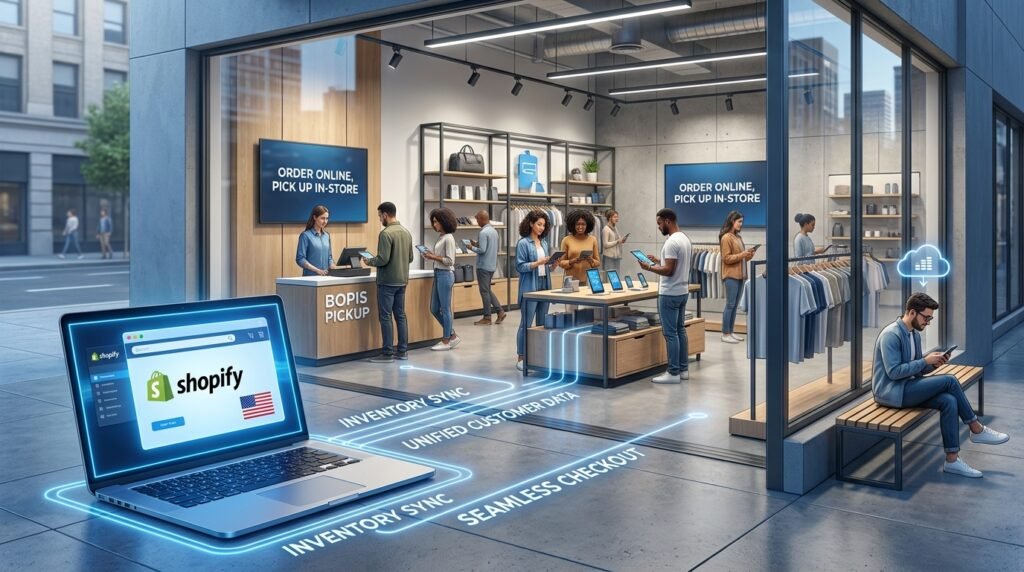
A customer may discover a product on social media, browse it on a Shopify store, visit a retail location to see it in person, and complete the purchase through a mobile device. This shift has made omnichannel selling one of the most important strategies for modern brands.
For businesses using Shopify, connecting online stores with physical retail locations is no longer optional because it’s becoming a competitive necessity. Brands that successfully unify these experiences can increase customer satisfaction, improve inventory management, and drive more revenue.
What Is Omnichannel Selling?
Omnichannel selling is a retail strategy that integrates all sales channels into a single, unified customer experience.
Instead of operating online and offline stores separately, businesses synchronize:
- Inventory
- Customer data
- Orders
- Returns
- Promotions
- Loyalty programs
This allows customers to interact with a brand consistently regardless of where they shop. Whether they purchase online, visit a retail location, or engage through social media, the experience remains connected.
Why Omnichannel Selling Matters More Than Ever
Today’s consumers expect convenience, flexibility, and consistency.
Many shoppers want the ability to:
- Buy online and pick up in-store (BOPIS)
- Return online purchases at a physical location
- Check local inventory availability online
- Receive personalized recommendations across channels
- Access the same promotions both online and offline
Brands that fail to deliver these experiences often struggle with customer retention and operational inefficiencies. Research and industry reports continue to show that modern retail success depends on connecting digital and physical touchpoints.
How Shopify Supports Omnichannel Selling
Shopify has evolved beyond a traditional ecommerce platform into a comprehensive commerce ecosystem.
With Shopify’s retail tools, businesses can manage online and in-store operations from a single platform. Key capabilities include:
Unified Inventory Management
Inventory updates automatically across all sales channels.
When a product sells online or in-store, stock levels are synchronized in real time. This reduces overselling and improves inventory accuracy.
Centralized Customer Data
Customer profiles are connected across online and physical stores.
Store associates can access purchase history, preferences, and previous interactions, allowing for more personalized service.
Buy Online, Pick Up In-Store (BOPIS)
BOPIS has become one of the most popular omnichannel features.
Customers can purchase products online and collect them from a nearby retail location, reducing shipping costs and increasing foot traffic.
Flexible Fulfillment Options
Retailers can:
- Ship from store
- Offer local pickup
- Provide local delivery
- Process returns across channels
This flexibility improves customer satisfaction while maximizing operational efficiency.
Key Benefits of Connecting Shopify with Physical Retail Locations
Enhanced Customer Experience
Customers expect convenience at every stage of their journey.
When online and offline channels are connected, shoppers enjoy a smoother purchasing experience, leading to higher satisfaction and stronger brand loyalty.
Increased Revenue Opportunities
Omnichannel customers tend to interact with brands through multiple touchpoints before making a purchase.
By offering services like in-store pickup and cross-channel promotions, businesses create more opportunities to convert shoppers into customers.
Better Inventory Accuracy
Disconnected systems often result in inventory mismatches.
Real-time synchronization ensures that customers see accurate stock information, reducing cancellations and lost sales.
Improved Business Insights
Unified reporting provides a complete view of customer behavior and sales performance.
Brands can identify trends, optimize inventory allocation, and make more informed decisions.
Common Omnichannel Challenges
While the benefits are substantial, implementation can present challenges.
Data Silos
Many retailers use separate systems for ecommerce and physical stores, creating disconnected customer and inventory data.
Inconsistent Customer Experiences
Different pricing, promotions, or product availability across channels can frustrate customers.
Inventory Synchronization Issues
Without proper integration, inventory discrepancies can lead to overselling and fulfillment delays.
These challenges highlight the importance of using a unified commerce platform rather than patching together multiple disconnected systems.
Best Practices for Omnichannel Success
To maximize the value of omnichannel selling, US brands should:
Maintain Real-Time Inventory Visibility
Customers should always see accurate stock levels regardless of channel.
Create Consistent Brand Experiences
Pricing, promotions, and messaging should remain aligned across all touchpoints.
Train Retail Staff
Store associates should have access to customer information and understand omnichannel processes.
Use Customer Data Strategically
Leverage purchase history and behavioral insights to deliver personalized experiences.
Invest in Unified Commerce Solutions
Platforms that centralize operations simplify management and improve scalability.
The Future of Omnichannel Retail
The future of retail is not online versus offline—it is the seamless integration of both.
Industry trends show increasing demand for unified commerce, where inventory, customer data, fulfillment, and sales channels operate as a single ecosystem. Retailers that embrace this model are better positioned to meet evolving consumer expectations and drive long-term growth.
Conclusion
Omnichannel selling has become a cornerstone of modern retail success. For US brands using Shopify, connecting online stores with physical retail locations creates a unified customer experience that drives sales, improves operational efficiency, and strengthens customer loyalty.
As consumer expectations continue to evolve, businesses that invest in seamless omnichannel experiences will gain a significant competitive advantage. Whether through real-time inventory synchronization, BOPIS services, or unified customer data, the future belongs to brands that successfully bridge the gap between digital and physical retail.
Frequently Asked Questions
Omnichannel selling is a retail strategy that integrates online and offline sales channels into a single customer experience.
It improves customer satisfaction, increases sales opportunities, and helps businesses manage inventory and customer data more effectively.
Yes. Shopify provides tools for inventory synchronization, customer management, in-store pickup, shipping, and unified reporting across online and physical locations.
BOPIS stands for Buy Online, Pick Up In-Store. It allows customers to purchase products online and collect them from a physical retail location.
Customers can move seamlessly between online and offline channels while receiving consistent service, pricing, and product availability information.
Explore More : Shopify and Its related services