
Artificial Intelligence (AI) is transforming the way businesses attract, engage, and convert customers. From content creation to customer segmentation, marketing with AI is helping companies make better decisions, automate repetitive tasks, and achieve higher returns on investment.
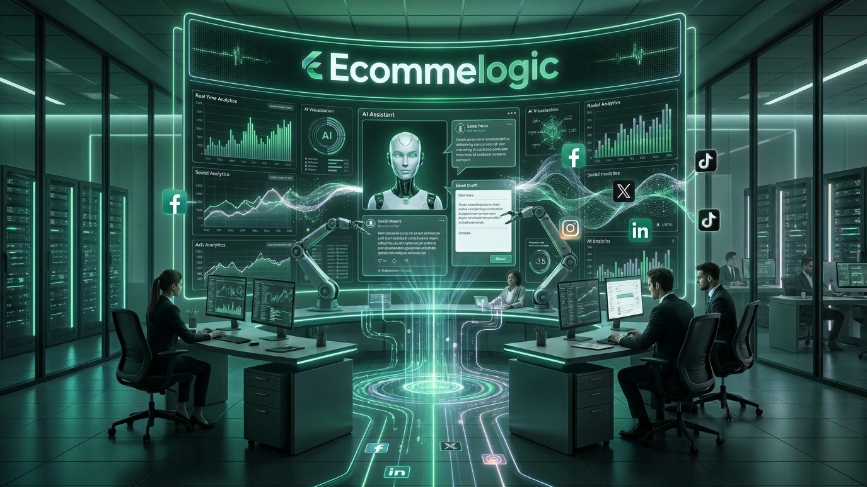
Whether you run an eCommerce store, SaaS company, agency, or local business, AI-powered marketing tools can significantly improve your marketing performance while reducing costs and manual effort.
In this guide, you’ll learn how marketing with AI works, its benefits, practical applications, and the best strategies to stay ahead in 2026.
What Is Marketing with AI?
Marketing with AI refers to the use of artificial intelligence technologies to automate, optimize, and enhance marketing activities. AI systems analyze large amounts of customer data, identify patterns, predict behaviors, and generate insights that help marketers make informed decisions.
Instead of relying solely on manual analysis, businesses can use AI to:
- Create content faster
- Personalize customer experiences
- Improve advertising performance
- Predict customer behavior
- Automate marketing campaigns
- Enhance customer support
As a result, companies can achieve better outcomes with fewer resources.
Why Marketing with AI Is Important
Modern consumers expect personalized experiences. However, delivering personalization at scale can be difficult without advanced technology.
This is where AI becomes valuable.
AI can process thousands of customer interactions in seconds and provide actionable insights that help businesses understand:
- Customer preferences
- Purchase behavior
- Browsing patterns
- Engagement trends
- Buying intent
Consequently, marketers can create highly targeted campaigns that resonate with their audience.
Key Benefits of Marketing with AI
1. Improved Customer Personalization
AI analyzes customer data to deliver personalized recommendations, emails, advertisements, and product suggestions.
For example, online retailers use AI algorithms to recommend products based on previous purchases and browsing history.
This personalized approach increases customer satisfaction and conversion rates.
2. Faster Content Creation
AI-powered tools can generate:
- Blog posts
- Product descriptions
- Social media captions
- Email campaigns
- Ad copy
While human review remains essential, AI dramatically reduces content production time.
3. Better Marketing Decisions
AI-driven analytics help marketers identify trends and opportunities that may otherwise go unnoticed.
Instead of relying on assumptions, businesses can make data-driven decisions based on real customer behavior.
4. Enhanced Lead Generation
AI can score leads automatically and identify prospects most likely to convert.
This allows sales teams to focus their efforts on high-value opportunities.
5. Higher ROI on Advertising
AI advertising platforms optimize campaigns in real time by adjusting bids, targeting, placements, and creative elements.
As a result, businesses can maximize returns while minimizing wasted ad spend.
Practical Applications of Marketing with AI
AI Content Marketing
Content marketing remains one of the most effective digital marketing strategies.
AI assists by:
- Generating content ideas
- Creating article outlines
- Optimizing SEO content
- Analyzing competitor content
- Identifying trending topics
This enables marketers to publish more relevant content consistently.
AI-Powered Email Marketing
AI improves email marketing through:
- Personalized subject lines
- Audience segmentation
- Send-time optimization
- Automated email sequences
- Predictive analytics
These enhancements often lead to higher open rates and click-through rates.
AI Chatbots and Customer Support
Modern AI chatbots provide instant support 24/7.
Benefits include:
- Faster response times
- Reduced support costs
- Increased customer satisfaction
- Better lead qualification
Many businesses use chatbots to answer frequently asked questions and guide customers through the buying process.
AI in Social Media Marketing
Social media marketers use AI to:
- Generate captions
- Schedule content
- Analyze audience behavior
- Monitor brand sentiment
- Predict engagement performance
This helps brands maintain a consistent and effective social media presence.
AI for Search Engine Optimization (SEO)
AI tools support SEO efforts by:
- Conducting keyword research
- Analyzing competitors
- Optimizing on-page SEO
- Identifying content gaps
- Improving content readability
As search algorithms become more sophisticated, AI-powered SEO tools are becoming increasingly valuable.
Best AI Marketing Tools in 2026
Several AI tools are helping marketers improve productivity and performance:
Content Creation Tools
- ChatGPT
- Claude
- Gemini
- Jasper
SEO Tools
- Surfer SEO
- Frase
- Semrush AI Features
- Ahrefs AI Tools
Email Marketing Tools
- HubSpot AI
- Mailchimp AI
- ActiveCampaign
Advertising Platforms
- Google Ads AI
- Meta Advantage+
- Microsoft Advertising AI
Selecting the right tools depends on your business goals, budget, and marketing strategy.
Challenges of Marketing with AI
Although AI offers significant advantages, businesses should also consider potential challenges.
Data Privacy Concerns
AI systems rely heavily on customer data. Therefore, companies must comply with privacy regulations and maintain transparent data practices.
Over-Automation
Too much automation can make customer interactions feel impersonal.
Successful businesses balance AI efficiency with human creativity and empathy.
Accuracy and Quality Control
AI-generated content and recommendations are not always perfect.
Human oversight remains essential to ensure accuracy, relevance, and brand consistency.
Future Trends in Marketing with AI
The future of AI marketing looks promising.
Emerging trends include:
- Hyper-personalized customer experiences
- Predictive customer journey mapping
- AI-generated video content
- Voice search optimization
- Advanced conversational AI
- Real-time campaign optimization
Businesses that adopt these technologies early will likely gain a competitive advantage.
How to Get Started with Marketing with AI
If you’re new to AI marketing, start with these steps:
- Identify repetitive marketing tasks.
- Choose one AI tool for automation.
- Collect and organize customer data.
- Measure results consistently.
- Scale successful AI initiatives gradually.
Starting small allows businesses to learn and adapt without significant risk.
Conclusion
Marketing with AI is no longer a futuristic concept—it is a practical business strategy that helps organizations increase efficiency, improve personalization, and drive better results.
From content creation and SEO to customer support and advertising, AI is reshaping every aspect of digital marketing. Companies that embrace AI while maintaining a human-centered approach will be better positioned to thrive in an increasingly competitive marketplace.
As AI technology continues to evolve, businesses that integrate intelligent marketing solutions today will be prepared for the opportunities of tomorrow.