
Digital marketing is no longer about static posts and one-way communication. Today, audiences expect participation. They want to click, explore, try, vote, swipe, and experience a brand before they buy. This shift is why interactive content has become one of the most powerful strategies in modern marketing.
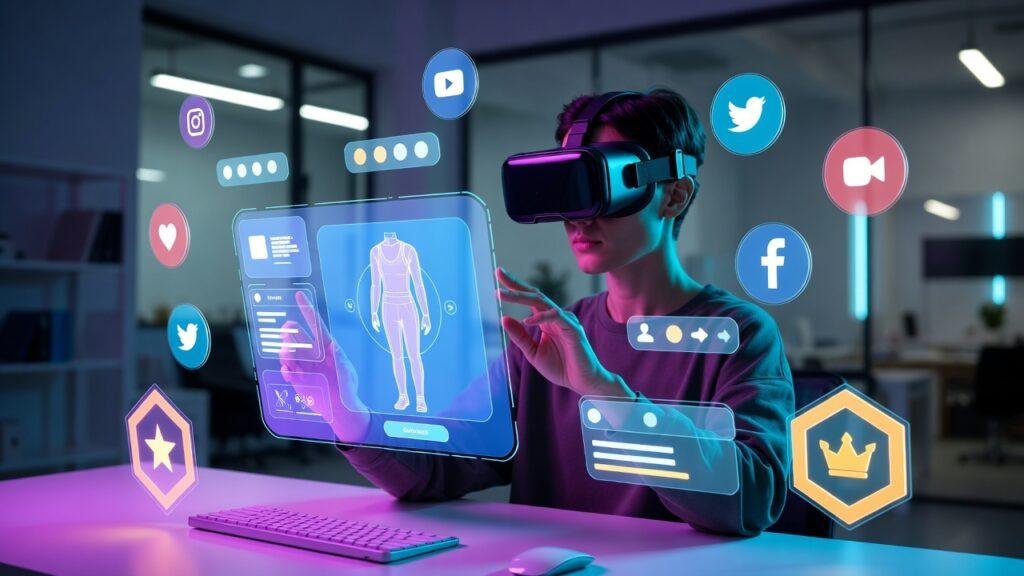
From AR product try-ons to gamified campaigns and user-generated content, brands are moving toward immersive storytelling that captures attention and keeps users engaged longer.
In this guide, we’ll explore how interactive content works, why it matters, and how businesses can use it to increase engagement and conversions.
What Is Interactive Content?
Interactive content refers to digital experiences that require active user participation instead of passive consumption. Unlike traditional blog posts or static ads, interactive formats encourage users to engage directly with the brand.
Common examples include:
- Augmented reality (AR) product try-ons
- Virtual reality (VR) experiences
- Interactive videos
- Polls and quizzes
- Gamified campaigns
- User-generated content (UGC) contests
- Calculators and configurators
The goal of interactive content marketing is simple: increase engagement, improve retention, and guide users toward conversion through participation.
Why Interactive Content Is Important for Modern Brands
Consumer attention spans are shorter than ever. Traditional ads often get ignored. Interactive experiences, however, hold attention longer and create stronger emotional connections.
Here’s why interactive content delivers results:
1. Higher Engagement Rates
Users spend more time on pages that allow interaction. Increased dwell time signals value to search engines, which can improve SEO performance.
2. Better Brand Recall
Experiential storytelling makes your brand memorable. When customers participate, they remember the experience.
3. Improved Conversion Rates
AR try-ons and interactive demos reduce uncertainty. When customers can visualize products in real time, they are more confident in purchasing.
4. Stronger Data Collection
Interactive tools provide insights into customer preferences, helping brands refine targeting and personalization.
How AR and VR Are Transforming Interactive Content
Augmented Reality and Virtual Reality are reshaping digital marketing by offering immersive experiences.
AR Product Try-Ons
AR allows customers to visualize products before buying. Fashion brands use AR filters to show how clothes look. Furniture brands let users place items in their rooms virtually. Beauty brands enable virtual makeup trials.
This reduces return rates and increases purchase confidence.
VR Brand Experiences
Virtual reality creates immersive brand environments. Businesses can build digital showrooms, interactive tours, or product simulations that give customers a deeper understanding of offerings.
For ecommerce brands, this means turning browsing into an experience rather than a simple transaction.
Gamified Marketing: Turning Engagement into Fun
Gamified content uses rewards, points, challenges, and competitions to increase participation.
Examples include:
- Spin-to-win discounts
- Referral reward systems
- Interactive quizzes with prizes
- Social media challenges
- Limited-time digital missions
Gamification taps into psychology. People enjoy achievement and rewards. When brands use interactive content in this way, engagement increases naturally.
The Power of User-Generated Interactive Campaigns
User-generated content campaigns encourage audiences to create and share content related to your brand.
For example:
- Photo contests
- Hashtag challenges
- Review competitions
- Community storytelling
When customers participate, they become brand advocates. This builds trust and social proof, which are critical ranking and conversion factors.
SEO Benefits of Interactive Content
Interactive content does not just improve engagement. It also strengthens SEO when implemented correctly.
Here’s how:
Increased Dwell Time
When users spend more time interacting with your page, search engines interpret it as valuable content.
Lower Bounce Rate
Engaging formats reduce immediate exits, improving behavioral signals.
Shareability
Interactive campaigns are more likely to be shared on social media, generating backlinks and referral traffic.
Keyword Integration
Interactive tools like quizzes and calculators can be optimized around targeted keywords such as “interactive content marketing,” “AR marketing strategies,” or “immersive digital campaigns.”
To maximize SEO impact, ensure:
- Fast loading speed
- Mobile optimization
- Clear internal linking
- Proper schema markup
- Optimized meta titles and descriptions
How Businesses Can Implement Interactive Content
If you want to integrate interactive content into your marketing strategy, follow these steps:
- Identify customer pain points
- Choose the right interactive format
- Optimize for SEO from the beginning
- Track engagement metrics
- Refine campaigns based on performance data
Start simple. Polls, quizzes, and interactive videos can be implemented without complex development. As your brand grows, AR and VR solutions can elevate the experience further.
The Future of Interactive Content Marketing
The future of digital marketing is immersive. Consumers want experiences, not advertisements. Brands that adopt interactive content strategies will see stronger engagement, better conversion rates, and improved brand loyalty.
AR filters, gamified campaigns, and participatory storytelling are no longer optional trends. They are becoming essential components of competitive marketing strategies.
Businesses that invest in interactive experiences today will be better positioned to dominate tomorrow’s digital landscape.
Final Thoughts
Interactive content is transforming how brands communicate with audiences. By combining AR, VR, gamification, and user participation, businesses can create meaningful digital experiences that drive measurable results.
If your brand wants to move beyond static marketing and build real engagement, now is the time to adopt interactive content strategies.
At EcommeLogic, we help businesses design immersive digital campaigns that increase engagement, improve SEO performance, and drive conversions through strategic interactive marketing solutions.