
Running an ecommerce store successfully is not only about getting visitors to your website. Many businesses spend money on ads, social media, and SEO but still struggle to generate consistent sales. In most cases, the issue is not the traffic itself — it is the overall shopping experience.
When people visit your store, they decide within seconds whether they want to stay or leave. Small problems in design, speed, trust, or user experience can quietly reduce conversions without you even realizing it.
If your ecommerce store is receiving visitors but sales remain low, here are five major reasons that could be hurting your conversions and what you can do to improve them.
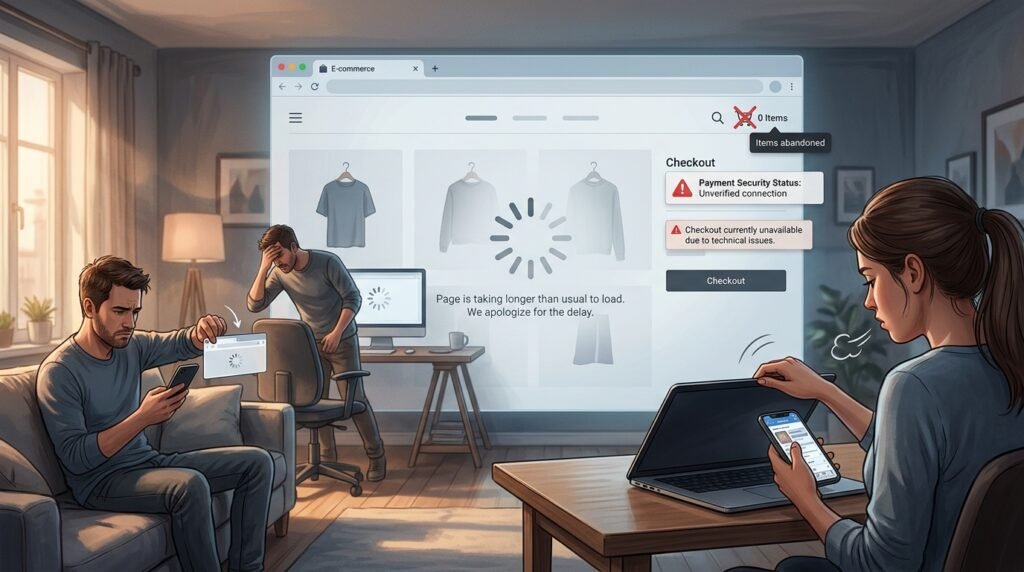
1. Your Website Feels Slow
Online shoppers expect speed. If your website takes too long to load, people lose interest quickly and move to another store.
A slow ecommerce site creates frustration and makes the shopping experience feel unreliable. Customers often associate website speed with professionalism. If the store feels slow or unresponsive, trust immediately decreases.
There are several reasons why ecommerce websites become slow. Large image files, excessive apps, complicated themes, and unnecessary animations are common causes. Even too many background scripts can affect loading performance.
Improving speed starts with simplifying your store. Compress images before uploading them, remove apps you no longer use, and avoid adding unnecessary visual effects. Choosing a lightweight and optimized theme also helps create a smoother experience.
A faster website keeps visitors engaged longer and increases the likelihood of completing a purchase.
2. Your Product Pages Do Not Build Confidence
Your product page is one of the most important parts of your ecommerce store. It is where customers decide whether your product is worth buying.
Many stores make the mistake of using generic descriptions or low-quality product photos. Some fail to clearly explain what makes the product valuable. If visitors do not fully understand the product, they hesitate to buy.
Good product pages should answer customer questions before they even ask them. Clear descriptions, detailed benefits, accurate pricing, and realistic product images all help improve confidence.
Adding customer reviews can also make a huge difference. Buyers trust real experiences from other customers more than promotional claims. Trust signals such as secure payment icons, refund policies, and shipping details also help reduce hesitation.
The more confident customers feel, the easier it becomes for them to complete a purchase.
3. Your Store Design Looks Unprofessional
First impressions matter in ecommerce. A poorly designed website can instantly reduce trust, even if your products are good.
Visitors often judge a business based on how the website looks. Cluttered layouts, inconsistent colors, outdated designs, and confusing navigation make stores appear unreliable.
A clean and modern design creates confidence. Customers should be able to browse products easily without feeling overwhelmed. Simple navigation, organized categories, and clear call-to-action buttons improve the shopping experience.
Mobile responsiveness is equally important. Since a large percentage of ecommerce traffic comes from smartphones, your website should work smoothly on all screen sizes.
Professional branding also plays a role. Consistent fonts, colors, and visuals make your business appear more established and trustworthy.
4. The Checkout Process Creates Friction
Many ecommerce stores lose customers during checkout. Even shoppers who are ready to buy may abandon their carts if the process feels difficult or time-consuming.
Long forms, forced account registration, unexpected charges, or limited payment options are common reasons why customers leave before completing their purchase.
People want convenience. A smooth checkout experience should feel quick and simple. Reducing unnecessary steps can significantly improve conversions.
Offering guest checkout is important because not every customer wants to create an account. Showing shipping costs early also prevents unpleasant surprises later in the process.
The checkout page should focus on clarity and ease. The less effort customers need to make, the more likely they are to finalize their order.
5. You Are Bringing the Wrong Traffic
Sometimes the issue is not your website at all. Your marketing may simply be attracting people who are not interested in buying.
Getting thousands of visitors means very little if those visitors are not your target audience. Many ecommerce businesses focus too much on traffic numbers instead of traffic quality.
Your ads and content should target people who genuinely need your products. Understanding customer behavior, interests, and buying intent is essential for better conversions.
For example, if your marketing message does not match what visitors expect after clicking your ad, they are more likely to leave immediately. Consistency between your ads, landing pages, and product offerings is extremely important.
Attracting the right audience increases the chances of converting visitors into actual customers.
Final Thoughts
Low conversion rates are a common challenge for ecommerce businesses, but they are rarely caused by a single issue. In most cases, several small problems combine to create a poor shopping experience.
Improving website speed, strengthening product pages, building trust through design, simplifying checkout, and targeting the right audience can dramatically improve results over time.
Successful ecommerce stores are not built overnight. They grow through continuous optimization and understanding customer behavior. Small improvements in user experience often lead to significant increases in sales.
If you want to improve your ecommerce store professionally, ecommelogic helps businesses optimize their online stores for better performance, design, and conversions. A well-optimized ecommerce store does more than attract traffic — it creates trust, improves customer experience, and turns visitors into loyal buyers.
Consistent improvement is the key to long-term ecommerce success .