Creating a WordPress website is easy, but getting consistent traffic is where most websites struggle. If your pages are not properly optimized, search engines won’t understand your content and your ideal audience will never find you.
That’s exactly where on-page SEO makes the difference.
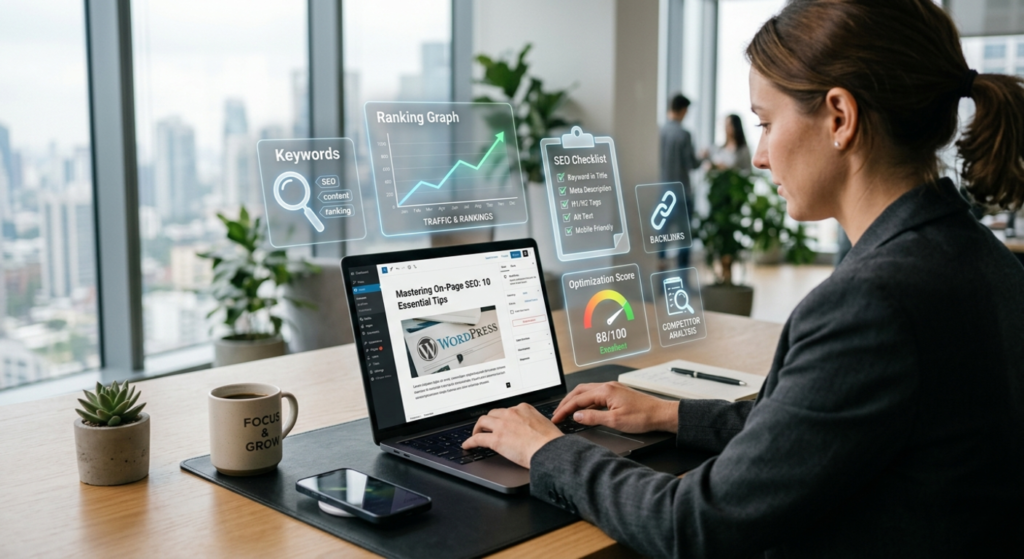
On-page SEO is not just about adding keywords. It’s about structuring your website in a way that both users and search engines can easily understand. When done right, it improves visibility, increases engagement, and helps convert visitors into customers.
Let’s break it down step by step in a practical way.
What On-Page SEO Really Means
On-page SEO includes everything you can control inside your website. From the way your content is written to how your pages are structured, every small detail plays a role.
Instead of focusing only on rankings, the real goal should be:
Make your content clear, helpful, and easy to navigate.
Search engines reward websites that offer a better user experience.
1. Find the Right Search Intent
Before writing anything, understand why someone is searching.
For example, a user searching “WordPress SEO guide” is looking to learn not to buy.
So your content should:
- Educate clearly
- Answer real questions
- Avoid unnecessary fluff
When your content matches intent, rankings improve naturally.
2. Write Titles That Feel Natural
A good title should not look forced. It should sound like something a real person would click.
Instead of stuffing keywords, focus on clarity.
Bad example:
“Best WordPress SEO Guide SEO Tips WordPress SEO”
Better approach:
“On-Page SEO Guide for WordPress Websites (Beginner to Advanced)”
Simple, clear, and effective.
3. Structure Content for Easy Reading
Most people don’t read—they scan.
So your content should be:
- Broken into short sections
- Supported with headings
- Easy to follow
Think of your blog like a roadmap. If users can navigate easily, they stay longer.
4. Keep URLs Clean and Meaningful
A messy link looks unprofessional and confusing.
Your URL should explain the page in a few words.
Example:
- Clean:
/on-page-seo-wordpress - Messy:
/post-78453?id=seo123
Short and clear always wins.
5. Use Keywords Without Forcing Them
Keywords still matter—but overusing them can harm your content.
Instead of repeating the same phrase:
- Use natural variations
- Write like you speak
- Focus on clarity first
If your content sounds human, it performs better.
6. Add Internal Links with Purpose
Internal links are not just for SEO—they guide your visitors.
When you mention something related, link to another page on your website. This keeps users engaged and helps search engines explore your site better.
But don’t overdo it. Keep it relevant.
7. Make Images Work for You
Images are not just for design—they support your content.
To optimize them:
- Use clear and relevant visuals
- Add simple descriptive ALT text
- Keep file sizes low
This improves both performance and accessibility.
8. Speed Matters More Than You Think
A slow website kills engagement.
People don’t wait. If your page takes too long, they leave.
To keep your site fast:
- Avoid heavy designs
- Limit unnecessary plugins
- Optimize media files
Speed directly affects both rankings and conversions.
9. Optimize for Mobile First
Your website will mostly be viewed on mobile devices.
If your site is hard to use on a phone, users won’t stay.
Check that:
- Text is readable without zooming
- Buttons are easy to click
- Layout adjusts properly
A smooth mobile experience is no longer optional.
10. Focus on User Experience
At the advanced level, SEO becomes less technical and more about experience.
Ask yourself:
- Is my content helpful?
- Is it easy to understand?
- Would I stay on this page?
Search engines track how users behave. If people stay longer, your rankings improve.
Mistakes That Quietly Hurt Your SEO
Some issues don’t look serious but can damage performance over time:
- Writing content just to fill space
- Ignoring readability
- Using outdated or thin information
- Making pages cluttered
Fixing these often brings better results than adding more keywords.
Final Thoughts
On-page SEO is not about tricks or shortcuts. It’s about building a website that makes sense—for both users and search engines.
When your content is clear, your structure is clean, and your website is easy to use, results follow naturally.
Instead of chasing algorithms, focus on delivering real value.
That’s what works long-term.
🚀 Need Expert Support?
At Ecommelogic, we help businesses create WordPress websites that are not only visually strong but also optimized for performance and growth.
If you want your website to rank better and convert more visitors, we’re here to make it happen.
Let’s build something that actually works. 🔥